July 1, 2014
The next day we took the train to Kendal, an intermediate stop on our way to the Lakes District. Not that we didn't find it lovely in its own right:
We went to visit the Museum of Lakeland Life and Industry, that being the kind of thing we tend to like. We got a nice view of local history, crafts (including some lovely old quilts) and let us not forget the Kendal Mint Cake- basically a mint-sugar candy bar with a long and storied history (they went up Mt. Everest, you know).
Naturally I had to try one...sweet and minty, as advertised.
We enjoyed a stroll around town- including passing by a half-timbered Chinese restaurant (what can I say, we're easily amused)-
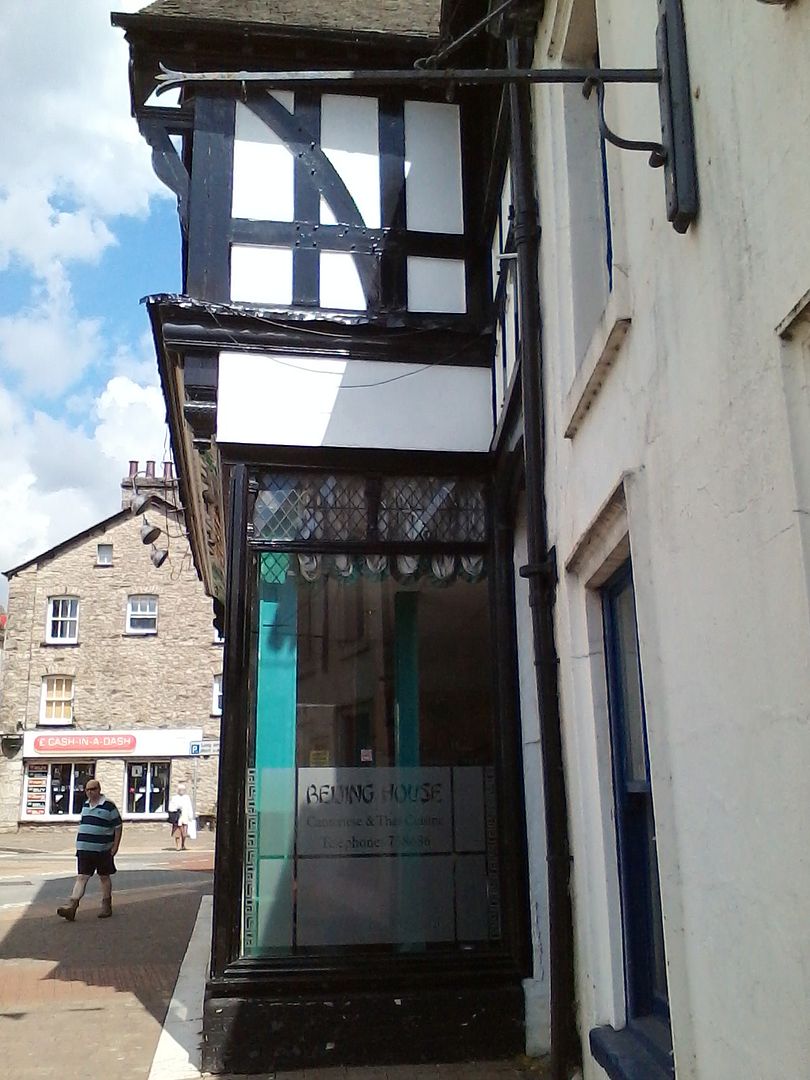
-and enjoyed sandwiches while we waited for the bus to Windermere. Not to be outdone, the Indians had their own half-timbered establishment:
We got to take a short stroll around Windermere, including our first glimpse of the famous lake:
And the town:
And then we took another bus, admiring the scenery all the way.
We had a gorgeous day- not that it was entirely due to luck, as we tend to structure our plans so we can swap indoor activities out if need be- but once again we enjoyed really fabulous weather for most of the trip. We made our way to Ambleside, where, in obedience to the name, we got out and started ambling.
We did see a few passing clouds, but no rain aside from a few light sprinkles.
We acquired a map of the local walking trails in Ambleside and set out to walk to Grasmere, widely reputed to be exceptionally pretty. We took the evocatively named Coffin Route.
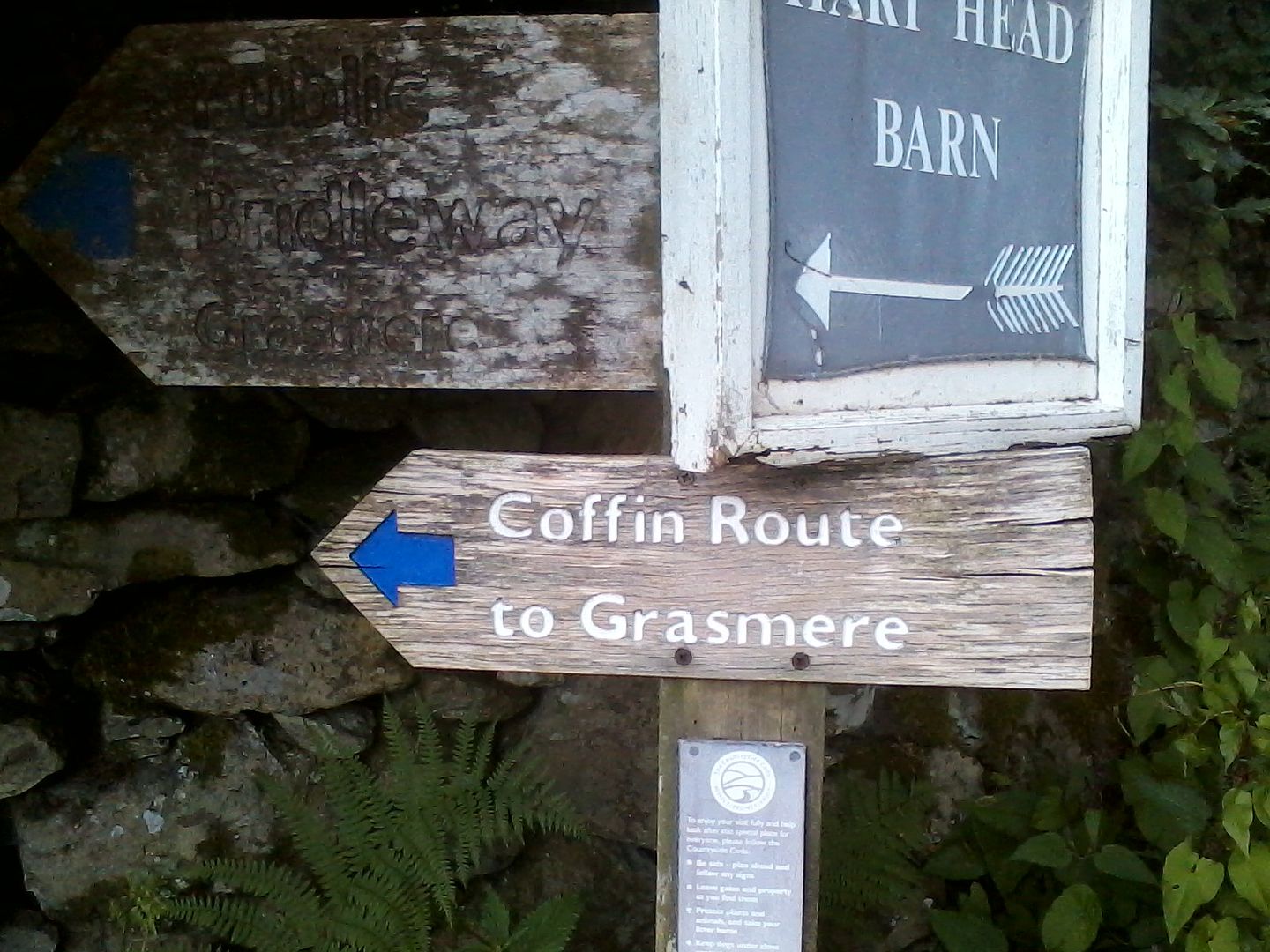
We spent some time speculating as to why the locals would have carried coffins over the hilly path rather than taking the much flatter road. We eventually found out that the road was a toll road, and decided that was probably why.
The path wound up through copses of trees and across streams.
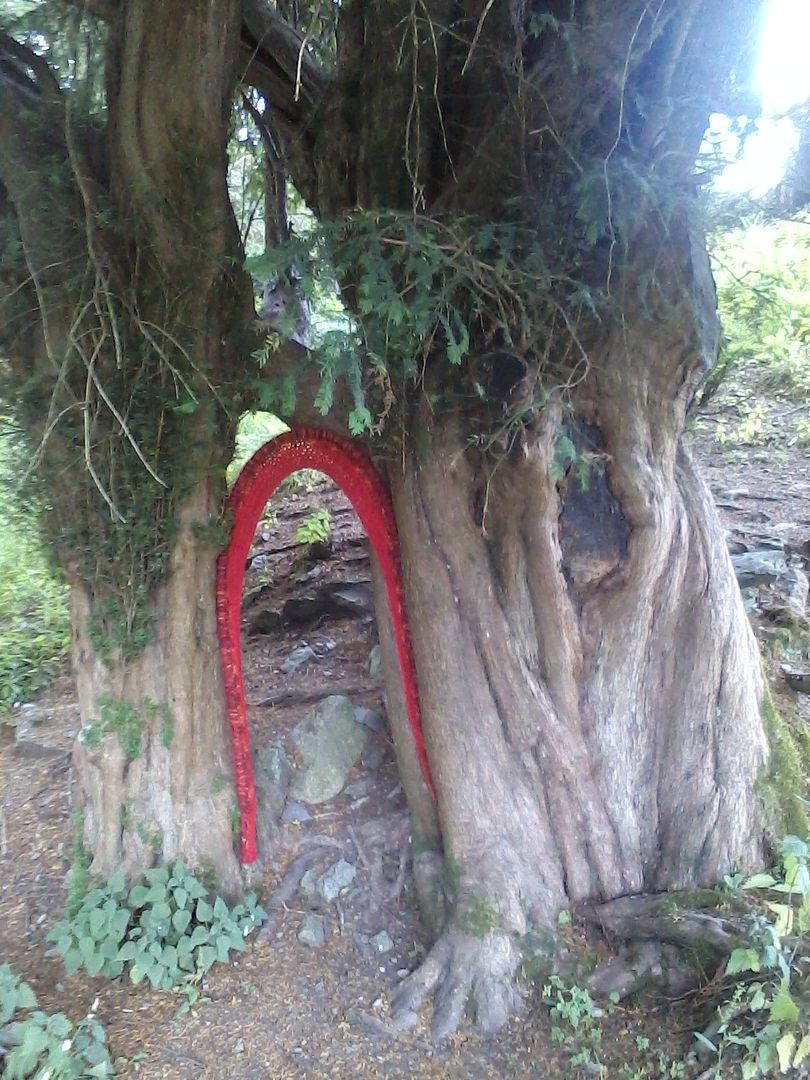
And we found, much to our amusement, that yarn artists had come before us:
We passed fields where the sheep roamed freely but the baby trees were penned (presumably to protect them from the sheep).
And at every turn we enjoyed the spectacular scenery. At some point we really need to go back so we can spend several days hiking and walking.
As we came down into Grasmere, we spotted a parasailor enjoying the breeze.
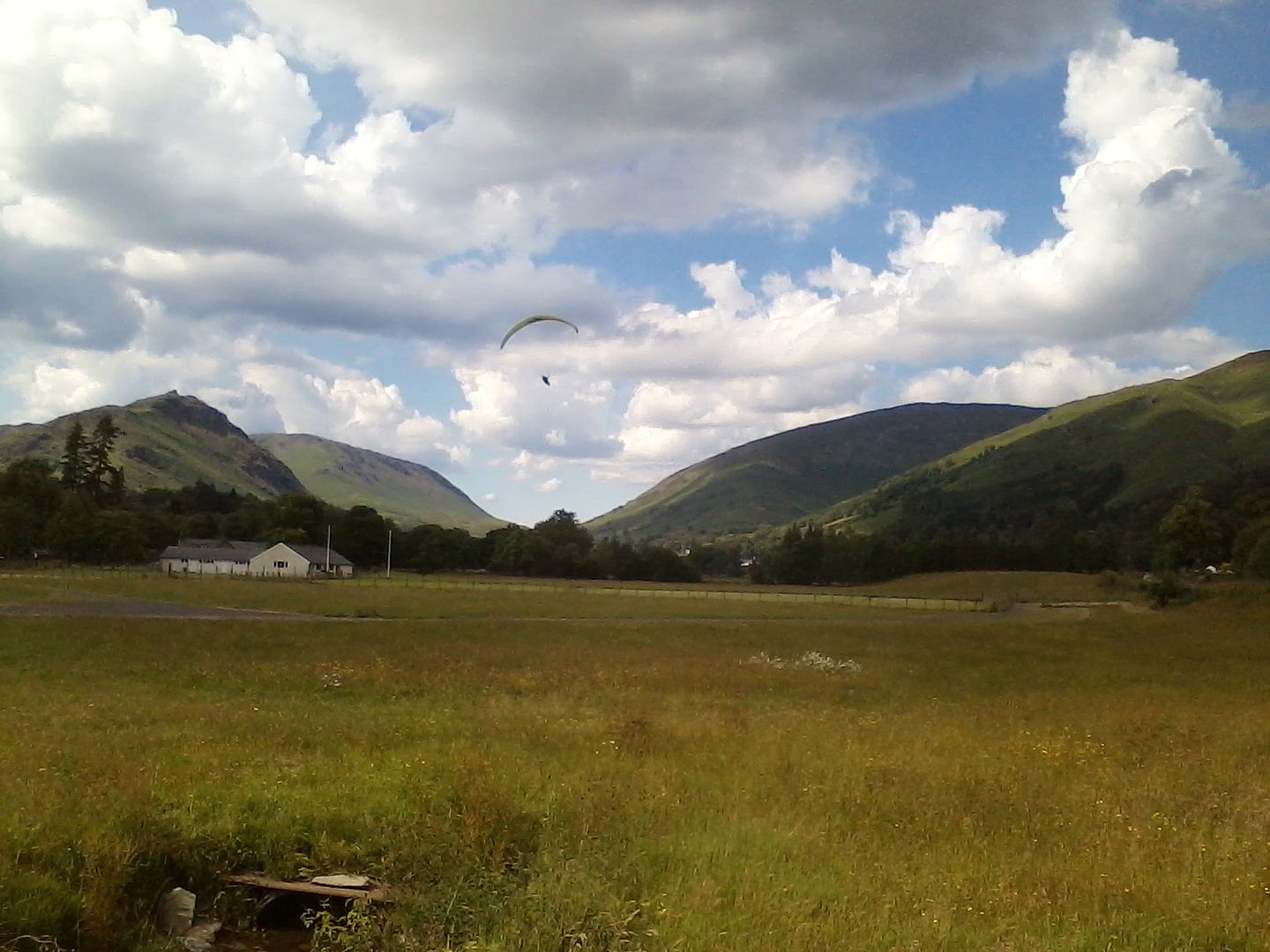
The village was as pretty as its reputation. We strolled through and found a cold drink. (Alas, the line at the gingerbread specialty bakery was so long, we decided to give it a pass.)
And that was pretty much the end of another fabulous day of walking, sightseeing and exploring.
We retraced our path by bus and train to Carlisle, where we at last got our Mexican food.
Wednesday, October 22, 2014
Tuesday, October 21, 2014
Day 10: The Wall
June 30, 2014
We set out in the morning for Hadrian's Wall via train to Haltwhistle (what a great name!) and bus to the first museum. The bus, which runs along the wall from tourist sight to tourist sight, is amusingly numbered the AD122 bus.
While I'd certainly heard of it and knew it for a massive piece of engineering, there were many things I'd never heard. For one, I hadn't realized just how gorgeous Northumberland was.
For another, I hadn't realized just how long the Romans had dominated the area. Our first stop was at the Roman Army museum near Greenhead. The museum is spectacular, not just for its display of artifacts but for the films it uses to recreate the life of the common soldiers stationed at this remote corner of the Empire. It gave a clear explanation of the organization of the army- which was astonishingly bureaucratic and modern by our standards- and a very human picture of what the lives of the people were like then.
We set out in the morning for Hadrian's Wall via train to Haltwhistle (what a great name!) and bus to the first museum. The bus, which runs along the wall from tourist sight to tourist sight, is amusingly numbered the AD122 bus.
While I'd certainly heard of it and knew it for a massive piece of engineering, there were many things I'd never heard. For one, I hadn't realized just how gorgeous Northumberland was.
![]() |
From the museum, we moved on to Vindolanda. It's still an active archaeological sight and it was tantalizing to think what treasures might still be undiscovered there. Because the soil there is very wet and acidic, this site has preserved more organic matter- hair, leather, wood- than most. Their collection of Roman leather shoes is amazing. They have the horsehair plumes that ornamented a Roman helmet. But the most spectacular of all are the letters. When the army pulled out, they dumped a bunch of unwanted correspondence- letters inked on wooden tablets- into a well and lit it on fire. Only the top layer burned- the rest was buried until it was unearthed by the Vindolanda excavation.
And they are remarkable- letters detailing the organization of the army, troop assignments, rosters, duties. And personal letters- an invitation to a birthday party from the wife of the fort's commander to the wife of the commander of another neighboring fort. Correspondence from soldiers to friends in other parts of the Empire, asking 'why don't you write more often?' or 'please send more warm socks' or 'thanks for the barrel of figs'. Really, not so different from soldiers far from home in modern armies.
The site is expansive, and displays many of the sophisticated building features you expect from the Romans. Warehouses for supplies with raised floors to keep them dry and make it harder for vermin to enter.
Hypocausts (underfloor heating) and expansive baths. A lovely villa for the commander and barracks for the troops.
For more Vindolanda pictures, see here.
After leaving Vindolanda, we had one more site we wanted to see. But, we also wanted to walk up along the wall. And there wasn't a lot of time. We decided that seeing more of the actual wall was the priority, so we hiked up to it. Good choice- the views were spectacular.
And once again, I was impressed by the breathtaking scope of the project. Originally the spanned the whole breadth of England, eighty miles. The wall itself stood twenty feet high. And for miles, it followed a giant escarpment that elevated it up to 200 feet higher- an impressive sight for the proto-Scottish savages that were forced to look up at it. Not to mention an inspiration to engineers of every time.
Every mile, there was a watchtower, called a mile-castle:
A famous pass through the hill, known as Sycamore Gap:
Another view from the wall:
We did in fact make it to the Housesteads Roman Fort in time to see the fort and take a quick turn through the museum, despite fairly inadequate signage. (There was a brief period of bushwacking through a thistle-covered pasture, but JT's superior navigational skills did not lead us astray. Though it is possible that I suffered a certain lack of faith and muttered a few rude things during the thistle-dodging part of the walk,)
It was an interesting fort, if not as lavishly interpreted as Vindolanda, and we were in time to take a quick pass through the museum and get cold drinks before they closed. Then, we had to hustle yet again for the bus back to the train back to Carlisle. Where we had planned to eat Mexican food but found that being a Monday, the Mexican restaurant was closed. But we had a perfectly fine meal at the local Weatherby's (an English pub chain), and fell into bed that night dreaming of the wind over the hills of Northumberland, and soldiers far from home shivering in the watchtowers as they stared out toward the wilderness of Scotland.
![]() |
| Vindolanda |
For more Vindolanda pictures, see here.
After leaving Vindolanda, we had one more site we wanted to see. But, we also wanted to walk up along the wall. And there wasn't a lot of time. We decided that seeing more of the actual wall was the priority, so we hiked up to it. Good choice- the views were spectacular.
And once again, I was impressed by the breathtaking scope of the project. Originally the spanned the whole breadth of England, eighty miles. The wall itself stood twenty feet high. And for miles, it followed a giant escarpment that elevated it up to 200 feet higher- an impressive sight for the proto-Scottish savages that were forced to look up at it. Not to mention an inspiration to engineers of every time.
Every mile, there was a watchtower, called a mile-castle:
A famous pass through the hill, known as Sycamore Gap:
Another view from the wall:
We did in fact make it to the Housesteads Roman Fort in time to see the fort and take a quick turn through the museum, despite fairly inadequate signage. (There was a brief period of bushwacking through a thistle-covered pasture, but JT's superior navigational skills did not lead us astray. Though it is possible that I suffered a certain lack of faith and muttered a few rude things during the thistle-dodging part of the walk,)
It was an interesting fort, if not as lavishly interpreted as Vindolanda, and we were in time to take a quick pass through the museum and get cold drinks before they closed. Then, we had to hustle yet again for the bus back to the train back to Carlisle. Where we had planned to eat Mexican food but found that being a Monday, the Mexican restaurant was closed. But we had a perfectly fine meal at the local Weatherby's (an English pub chain), and fell into bed that night dreaming of the wind over the hills of Northumberland, and soldiers far from home shivering in the watchtowers as they stared out toward the wilderness of Scotland.
Tuesday, September 16, 2014
Day 9: The People's Palace
June 29, 2014
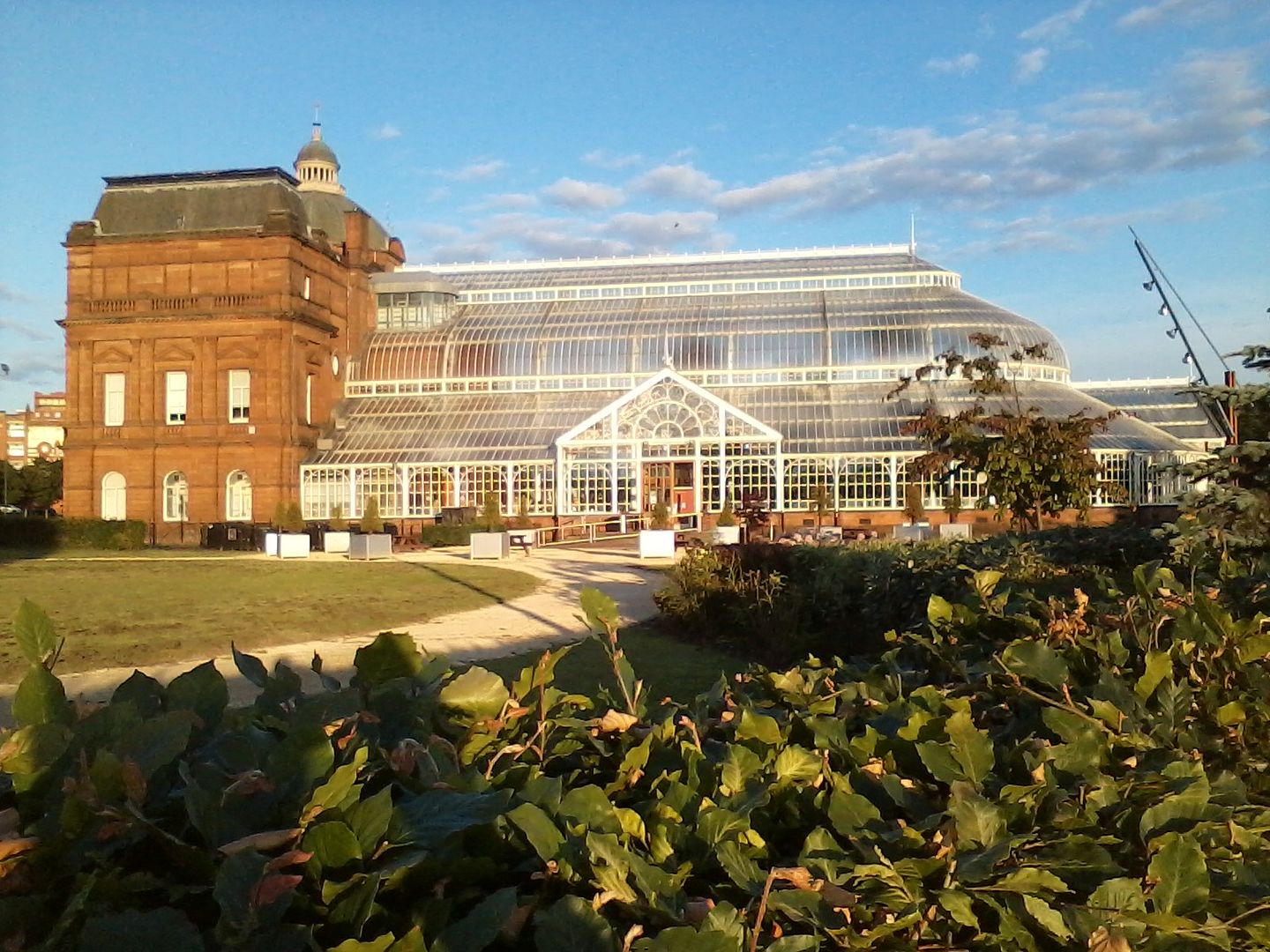
The next day was our last morning in Glasgow. We set off for the People's Palace and Winter Garden. It's a museum attached to a giant glass greenhouse, and I can only imagine how lovely it must be in winter to go into such a big warm open space and enjoy the green.
The museum was particularly interesting because it was focused on the social history of Glasgow, and the lives of the working people. The vivid picture of poverty and hardship depicted gave me a new understanding of the appeal of socialism in the nineteenth and early twentieth centuries there.
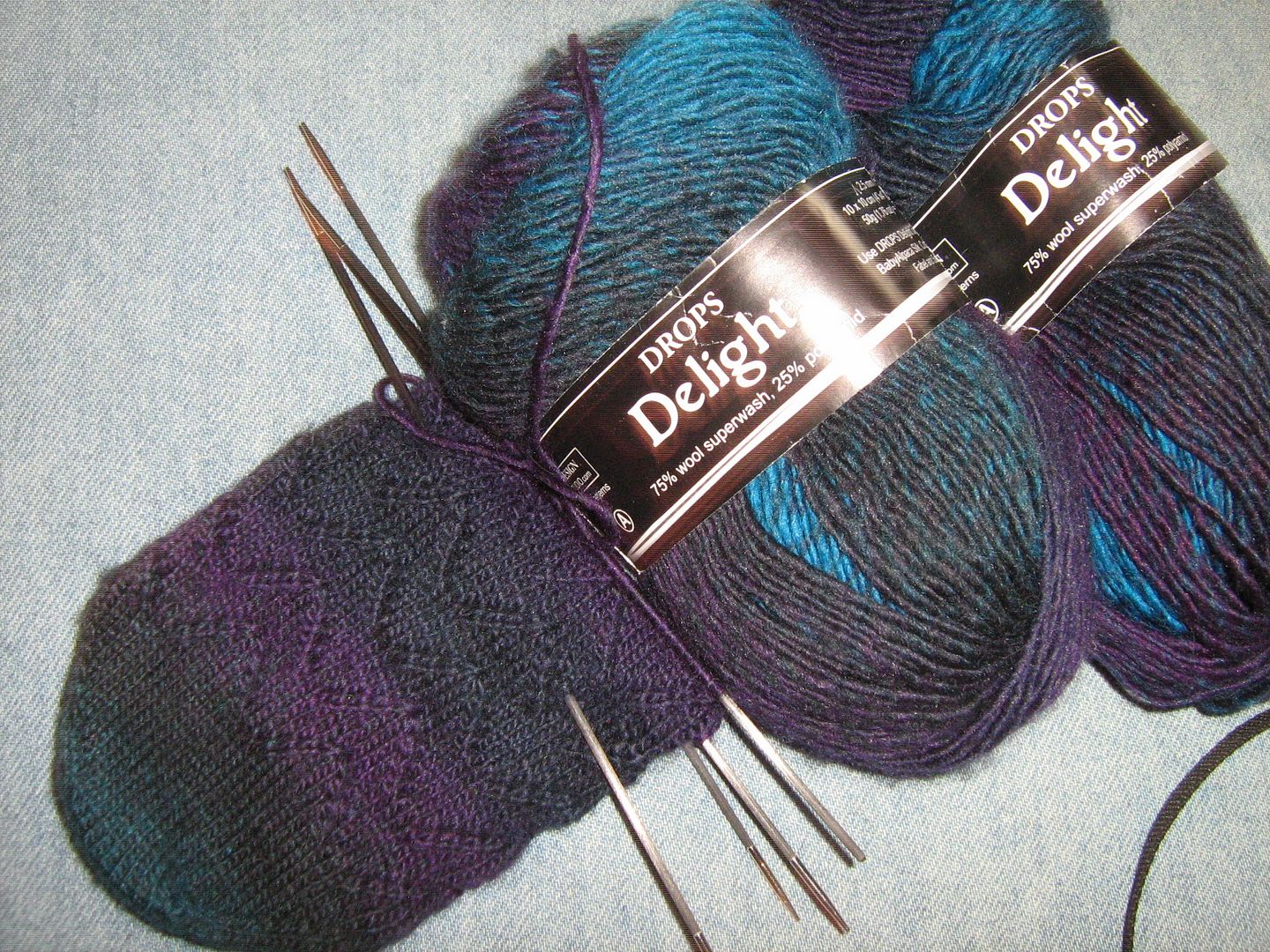
From the museum we made a brief stop at a yarn store, the delightful Queen of Purls- I'd finished the socks I was knitting and therefore was in need of more yarn. I was seriously tempted by some beautiful Scottish yarn, but I'd have wanted enough to do a colorwork sweater (and I was carrying everything for the trip in my backpack), so I managed to talk myself out of it and just picked up a little more sock yarn.
Lacking a handy pattern, I cast on and made up something vaguely mountain-ish - I'm thinking of these as the Trossachs socks (the Trossachs being the hills adjacent to Loch Lomond).
Having obtained the security of enough additional fiber to last the rest of the trip, we went on to see some more Mackintosh architecture and decor at The Lighthouse, which not only included a much more in-depth history of Mackintosh, but also a fascinating exhibit on sustainable building, and how it was implemented in building housing and other public projects in preparation for the Commonwealth games in Glasgow.
we went on to the train station and took a train to Carlisle.
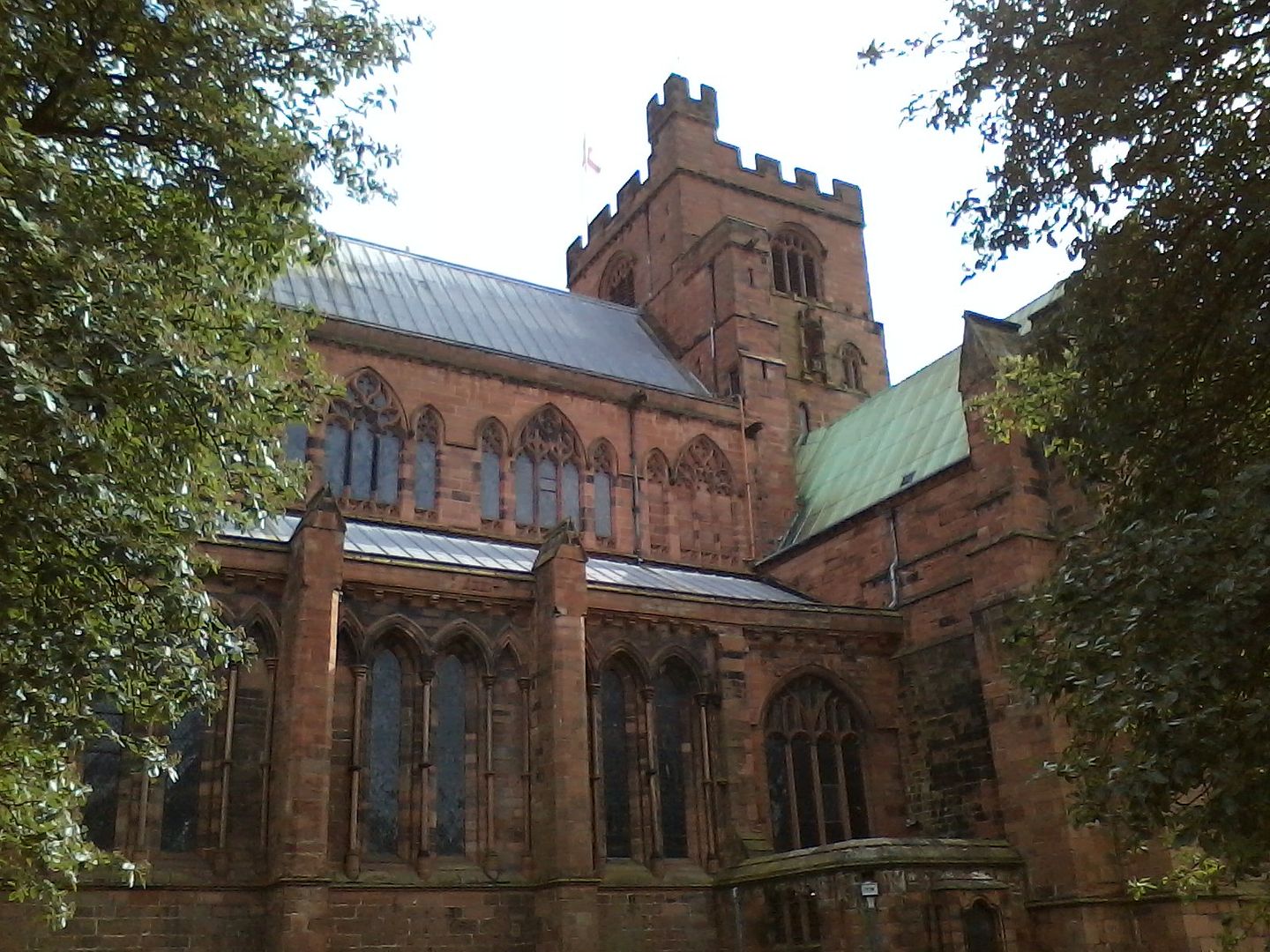
What's in Carlisle, you ask? Well- it was the western end of Hadrian's wall, has a lovely museum, and made a convenient base for exploration along the wall and into the Lakes Region. For the evening, however, we just strolled around the town center, getting our bearings and scoping out dinner options. We eventually had an absolutely delicious dinner at Andalusia, a Spanish restaurant just down the street from our hotel.
The next day was our last morning in Glasgow. We set off for the People's Palace and Winter Garden. It's a museum attached to a giant glass greenhouse, and I can only imagine how lovely it must be in winter to go into such a big warm open space and enjoy the green.
The museum was particularly interesting because it was focused on the social history of Glasgow, and the lives of the working people. The vivid picture of poverty and hardship depicted gave me a new understanding of the appeal of socialism in the nineteenth and early twentieth centuries there.
From the museum we made a brief stop at a yarn store, the delightful Queen of Purls- I'd finished the socks I was knitting and therefore was in need of more yarn. I was seriously tempted by some beautiful Scottish yarn, but I'd have wanted enough to do a colorwork sweater (and I was carrying everything for the trip in my backpack), so I managed to talk myself out of it and just picked up a little more sock yarn.
Lacking a handy pattern, I cast on and made up something vaguely mountain-ish - I'm thinking of these as the Trossachs socks (the Trossachs being the hills adjacent to Loch Lomond).
Having obtained the security of enough additional fiber to last the rest of the trip, we went on to see some more Mackintosh architecture and decor at The Lighthouse, which not only included a much more in-depth history of Mackintosh, but also a fascinating exhibit on sustainable building, and how it was implemented in building housing and other public projects in preparation for the Commonwealth games in Glasgow.
we went on to the train station and took a train to Carlisle.
![]() |
| Carlisle Cathedral |
Subscribe to:
Posts (Atom)